Simmons Says: My sit down with Dr. Swallows



Listen, let’s be frank: I’ve never been a huge fan of the TSSAA.
I’ve openly questioned their moves, motives and pretty much everything they’ve done as an organization over the last decade.
So sometimes, I think when I sit down with Dr. Grant Swallows, not only our local Director of Schools but also the TSSAA Board of Control president, people probably expect fireworks, a shouting match or – at the very least – something tense.
That’s never the case.
A lot of that is because I respect Dr. Swallows and what he does. And I think he respects the work I do too (or at least I tell myself that so I can sleep better at night).
Instead of just blasting the TSSAA for things that may or may not even be in their control, I’d rather figure out what’s actually happening behind the curtain. And right now, nobody is pretending they have all the answers.
On Tuesday, I sat down with Dr. Swallows again and one thing was very clear: when it comes to the one-time transfer rule signed into law last month, everybody is in the same boat.
“I get a lot of questions… that we really don’t have answers to yet,” Swallows said.
That may frustrate people. Some will say, “Isn’t he supposed to know?” But honestly, it’s the most honest answer you’re going to get right now. We don’t know.
A lot of it is because this isn’t some small tweak to the system. This may be the biggest shift Tennessee high school sports has ever seen. It will impact not just how teams are built, but how programs are sustained, how communities view success and how quickly things can change from one season to the next.
For the first time in a long time, I actually feel something I didn’t expect: sympathy for the TSSAA.
They didn’t ask for this shift, but now they’re responsible for managing it. All this time, they were running away from the Wild West scenario, only to be handed the badge and told, “You’re the sheriff now.”
And they’re going to have to figure it out in real time. There are going to be mistakes. There are going to be loopholes. There are going to be headlines.
Hopefully, there’s also opportunity: opportunity to fix things that have needed fixing for years, opportunity to modernize and opportunity to build something better.
Like I told Dr. Swallows at the end of my show Tuesday, we’ll sit right back down a year from now and talk about it again.
And by then, we’ll know exactly what this new world looks like: Good, Bad and Ugly.
Even tougher for the TSSAA, it’s not the only thing they’re dealing with right now. There are also discussions about recruiting rules, how state tournaments are seeded, how many teams should make the postseason and – while it doesn’t affect the state level – Dr. Swallows is heavily involved in local sports decisions as well.
Here’s what we were able to cover in an 80-minute session Tuesday:
Dr. Swallows said this on my show: everybody keeps saying they don’t want this to turn into the Wild West.
I’ve said it on my show, Chris Sullens has said it on the WCSA and I’ll reiterate it here: I think it’s going to.
Swallows didn’t shy away from that reality either. The focus now isn’t stopping movement, it’s controlling what comes with it.
“Recruiting is going to be a big deal. It’s already a big deal. Let’s call a spade a spade,” Swallows said.
That’s the part people need to understand.
This isn’t being introduced into a clean system. It’s being dropped into something that already has gray areas, whispers and behind-the-scenes movement. Coaches know it, administrators know it and players and parents definitely know it.
We’ve seen it in Warren County. There were kids heading out that we thought would always be Pioneers (or Lady Pioneers for life – a title that isn’t going to gain traction, IYKYK).
So when Dr. Swallows and the TSSAA bring up recruiting now, I think everybody hopes the difference is that everything is about to be magnified.
The TSSAA is trying to get ahead of it by defining recruiting violations in levels, spelling out punishments and putting structure around something that has been governed for years, but it’s hard to close every loophole or stop every back-channel deal.
These policies can be a step forward, but they won’t be a cure-all because here’s the truth: enforcement is going to be messy.
They don’t have the manpower to police every text, every social media post or every conversation that happens between players and coaches. A lot of this is going to come down to schools reporting each other, communities speaking up and evidence being brought forward.
And once that door opens, you better believe it’s not closing.
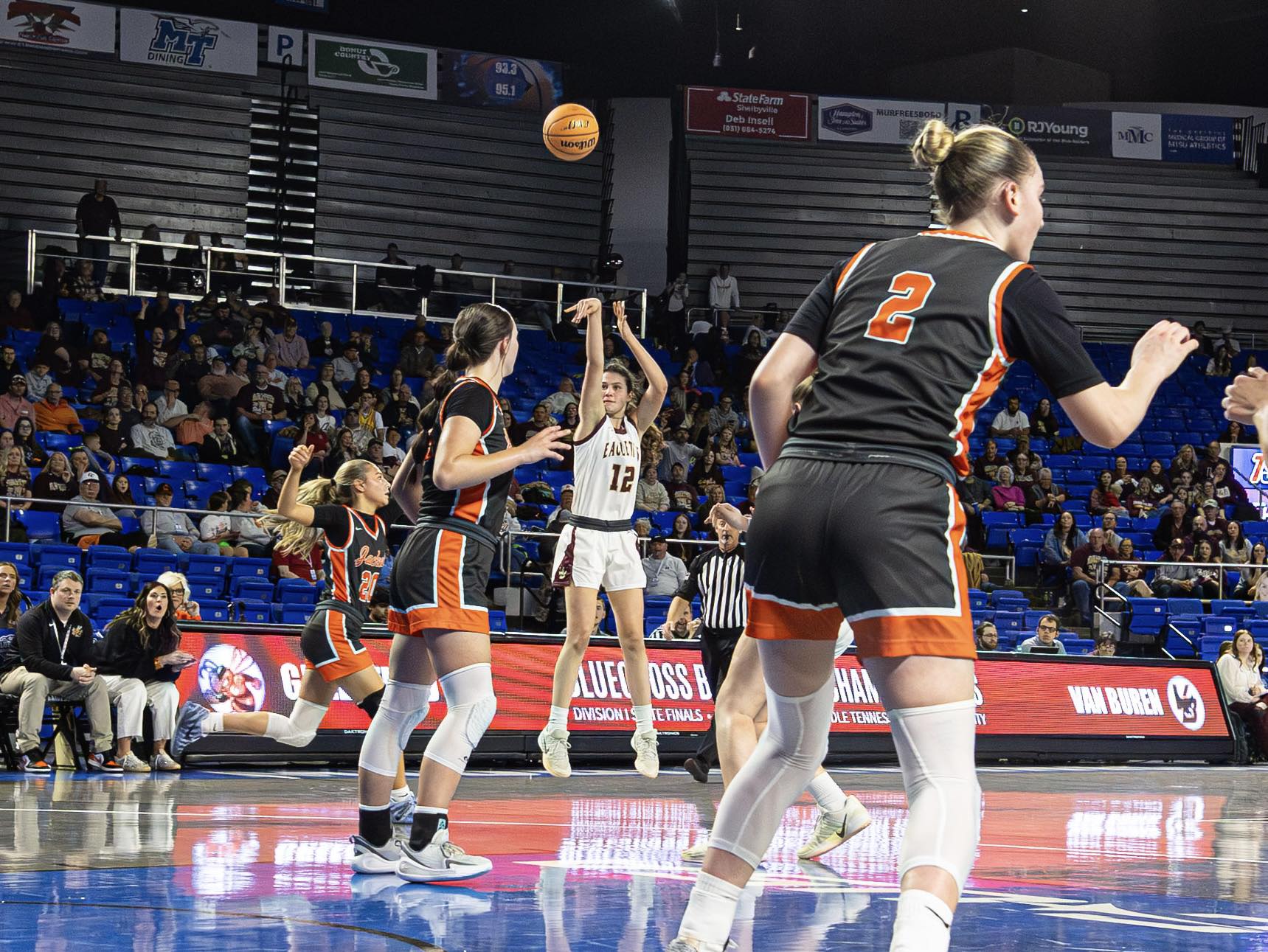
Now let’s get to the one that always gets people fired up: seeding.
The blind draw has been a tradition, but it’s also been a source of frustration for years. Too many times, the best teams end up meeting too early, turning what should be championship-level matchups into semifinal or even quarterfinal games.
And yes, the TSSAA is looking at it. Soccer has already started experimenting with ranking systems. Basketball could be next.
Swallows admitted he’s not personally against the idea of ranking systems on the show, nor does it seem like the TSSAA is ruling out any changes in the future. That’s significant.
And it’s also why I might have to stop grinding my axe every time the TSSAA is brought up because it does feel like they’re listening to concerns and evaluating if there’s a better way to do things. A ranking system could be better, but it also brings challenges and, even scarier, the potential for subjectivity.
That said, if you introduce seeding, you change how the entire season is viewed. Every game matters more, strength of schedule becomes a factor and – depending on the system – late-season performance carries weight beyond just district standings.
It also changes how fans experience the state tournament.
Instead of hoping the bracket breaks your way, you’re building toward a path that makes sense, one that rewards the best teams and sets up the biggest games at the right time.
There will be pushback. There always is when computers, rankings or formulas get involved. But if done right, it could elevate the entire postseason.
Or we’ll stick with ping pong balls and the old way. That’s still a possibility, though Dr. Swallows – ever vigilant in wanting to fight any perceived notion of shadiness – noted that maybe just going on Facebook Live with the ping pong drawing would be an easy first step in the state bracket process.
Personally, I’d appreciate any step toward open transparency, but much like Dr. Swallows said Tuesday, I just can’t get behind the thought of the TSSAA being so shady and controlling that it would intentionally spoil its best games by having them occur on the first day instead of the last.
They want the drama. They want the audience. And yes, they want the money.
With that in mind, I don’t think they’re freezing envelopes or using weighted ping pong balls to set these brackets – they’re just doing it blindly. And I’d like to see them open their eyes and explore new ways to do it.
And Dr. Swallows answered that loud and clear: they are.
This one might be the most controversial, but also the most logical. There’s more and more momentum behind the idea of cutting region qualifiers from four teams down to three. The Board of Control discussed it in their latest meeting and I heard about it from Sullens on the Warren County Sports Authority show and, honestly, it makes sense to me.
“You watch that first-round region… and those scores… please don’t be an 80-point win,” Swallows said, referencing some of the lopsided outcomes that have sparked the debate.
According to TSSAA data, the No. 1 seed wins those matchups around 90 percent of the time. And if you’ve seen those games, you know many of them aren’t competitive.
More importantly, I’m not sure they help either team and they don’t exactly create a great product for fans or communities. Maybe the team winning by 80 enjoys it, but if you traveled – sometimes hours – for a blowout loss, you might be staying home next year.
At the same time, there’s a human element to consider.
For some teams, that fourth seed is a reward. It’s a chance to extend the season, to give seniors one more game and to experience the postseason atmosphere.
That matters.
But from a big-picture standpoint, cutting it to three teams raises the stakes across the board.
Now the district tournament matters more. That consolation game becomes must-watch because it’s win-or-go-home. Regular season games carry more weight because seeding becomes more critical.
It’s a trade-off.
But it’s one that could make the postseason sharper, more competitive and more meaningful from start to finish.
If you want something that could quietly reshape local sports, it might be the under-200 rule. And depending on how it’s finalized, it could hit places like Warren County directly.
Right now, the idea being floated could allow students at smaller schools to try out for public school teams, essentially treating them in a similar way to homeschool or non-traditional students.
While some may think that doesn’t have much impact, I’d say that’s looking at sports strictly through red, white and blue glasses. And that’s fine – WCHS is the bell cow of sports in Warren County.
But for Covenant Academy or Boyd Christian School, it could be a boon or a bust depending on how it plays out.
As Dr. Swallows pointed out Tuesday, the original language of the bill suggested kids at smaller schools could try out at public schools even if their school offers that sport.
Read that again.
That would mean kids attending Boyd or Covenant could try out at WCHS for any sport, not just the ones their schools don’t offer.
Most people probably envisioned something different. Maybe a kid plays one sport at their school and another somewhere else based on availability.
But in that original form, it opens the door to something much bigger.
Parents could choose smaller class sizes at private schools and still have access to high-level competition at public schools. That’s a major shift in how athletics and education intersect.
Swallows acknowledged there’s pushback, especially from local education systems trying to balance academics with athletics, but he also didn’t dismiss the possibility.
“Would I be surprised if it passed? No,” he said.
Let’s just say of all the new topics being discussed, this one has my full attention. And yes, you know exactly why.

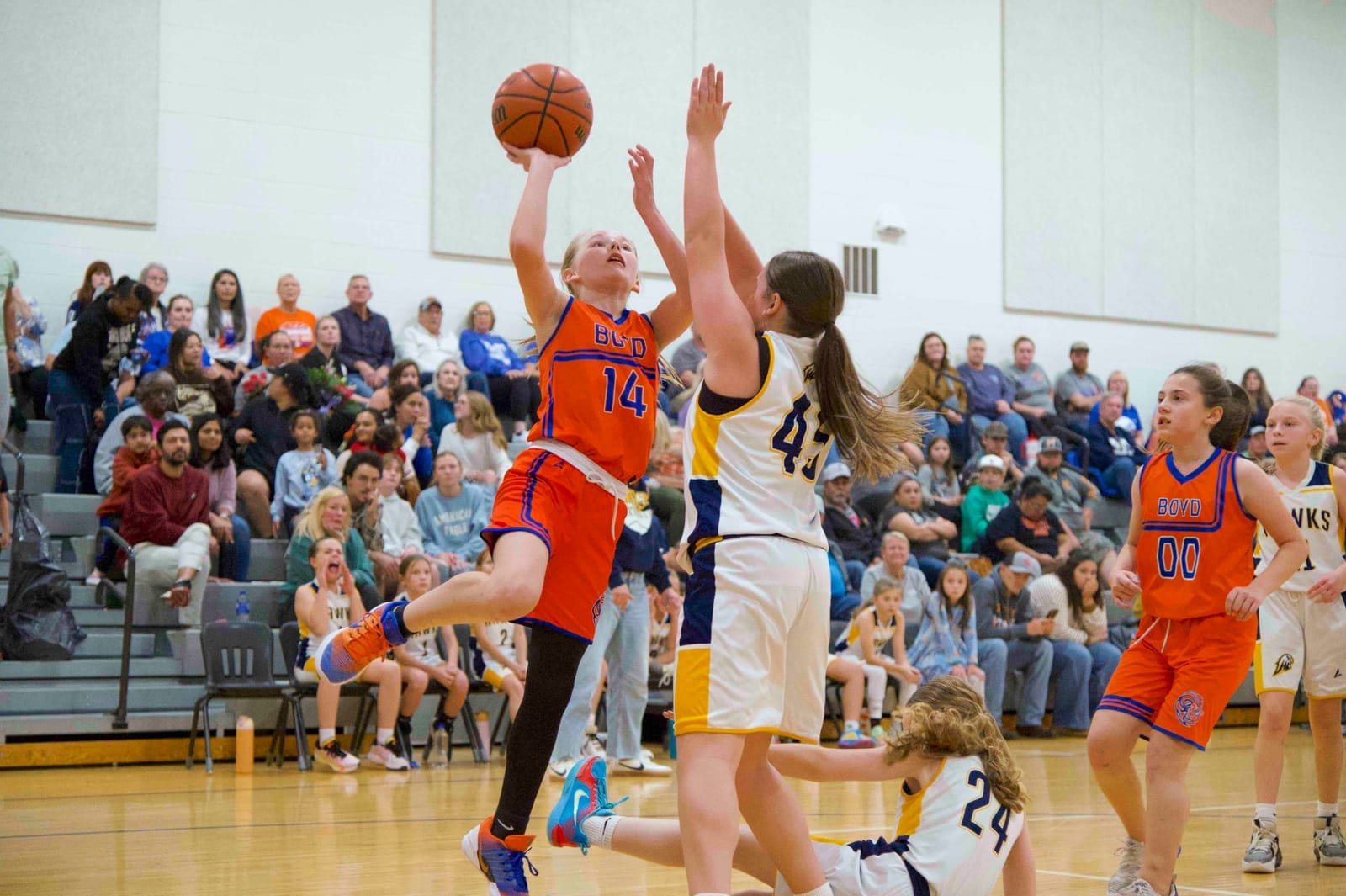
On the local level, it hasn’t all been chaos. Well, sometimes it has, but most of the major decisions from the last year – most notably going non-region in football and restructuring elementary basketball – seem to have worked.
Start with the fall, when the Pioneers went 6-5 and posted just their second winning season since 2000. I think most people would agree the schedule played a big role in boosting morale for Warren County football in the first year of the Eric Belew era.
“You want to build momentum… and we were able to do that,” Swallows said.
And that’s really what it was about.
Call it ducking competition if you want – I wouldn’t – but the schedule, the coaching change and everything else that shifted from 2024 to 2025 was about resetting expectations, giving the program a chance to grow and building confidence in a way that constant uphill battles don’t always allow.
It’s not a permanent fix, but it’s a strategic one.
At the same time, future decisions are coming. Warren County will eventually have to decide whether to rejoin region play or continue down this path, and that choice could be shaped by what happens at the state level with classifications and scheduling.
Elementary basketball changes were another big local shift. Not everybody loved it. In fact, plenty didn’t. But from a competitive standpoint, it delivered.
“It wasn’t the popular decision… but I feel like we made the best decision for everybody possible,” Swallows said.
And when you watched it play out, you could see why.
Most games were more competitive. Skill levels were more balanced. The gap created by age differences started to shrink.
There are still concerns, especially about keeping younger players engaged long-term, but overall, it felt like a move toward structure instead of chaos.