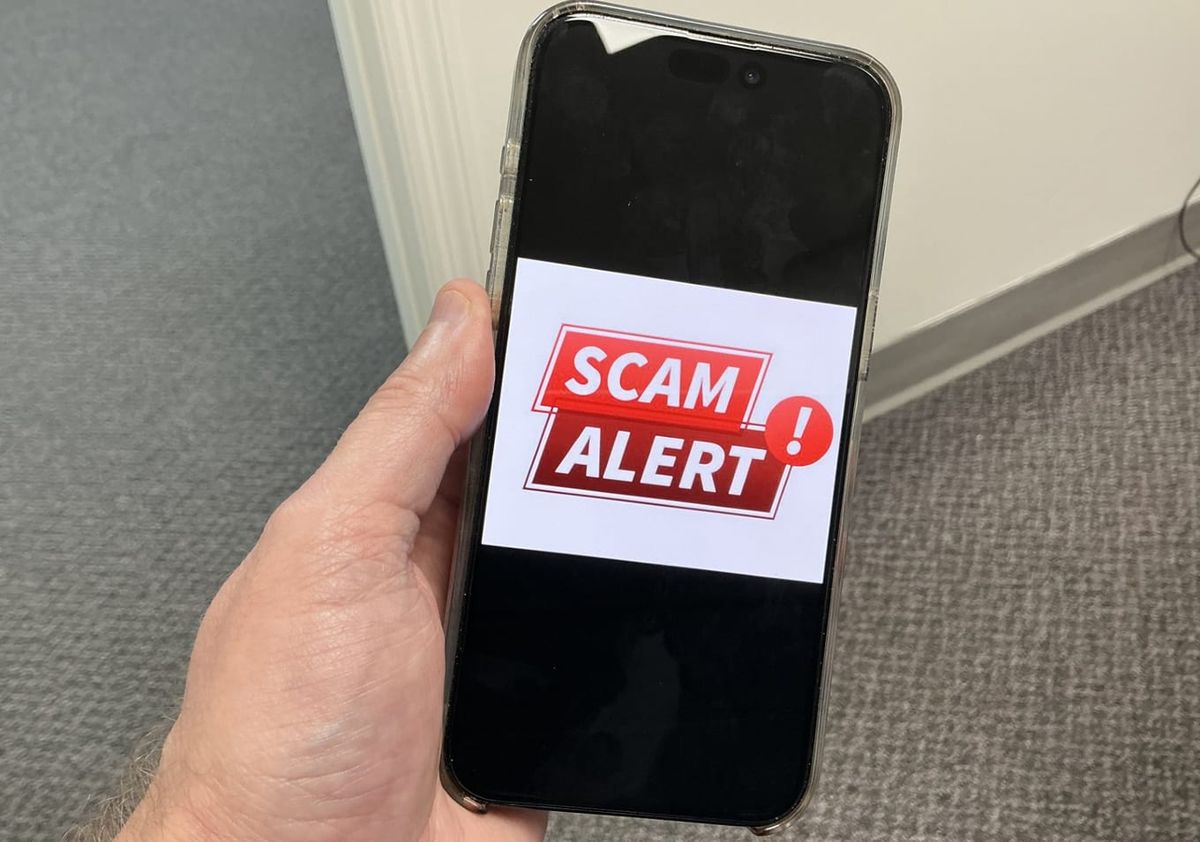
Your caller ID displays a number that’s vaguely familiar.
It’s from your area code so you take the call.
The friendly voice identifies herself as so-and-so from such-and-such local bank. The bank’s automated fraud detection system flashed your name and account information, she begins.
“This call is totally confidential,” she assures you. “We’re trying to track down a possible insider attempt to break into your account. We just need to verify your account number and your log-in credentials for your online banking.”
You see red flags, so you hang up the phone and immediately call your bank’s security office.
But some unwary people fall for the scam and freely give up all the information the fraudster needs to empty your bank account. The theft is accomplished in a matter of seconds, long before you reconsider and belatedly telephone the bank or law enforcement.
Americans in that last category lost an estimated $37 billion to telephone and internet fraud in 2025, according to the two main federal agencies tasked with enforcing laws and tracking cybercrimes, the FBI and Federal Trade Commission (FTC).
That figure would be much higher if more of those crimes had been reported, experts say.
The FBI and FTC say the grim statistics reflect “only what the victims choose to report.” Personal embarrassment and fear of retribution from the criminal scammers may account for much of the under-reporting.
“Research cited by the FTC puts the mass-market consumer fraud reporting rate at approximately 4.8%,” according to a July 17 2026 Axis research paper by Marcus Chen. If that’s correct, better than 95% of these thefts are never reported to the authorities.
“We do call our customers on occasion. Even if a number shows up as your local bank, hang up and call the bank to verify,” Coty Grissom, vice president at Homeland Community Bank, cautions.
“We don’t typically call and ask for (customer) account information. We already have that information,” he says in a WCPI conversation airing this week on McMinnville Public Radio 91.3.
Grissom joined other local bank officers for the half-hour discussion airing Wednesday, July 29 and Saturday at 9 a.m. both days.
Others in the recording are Jennifer Roberts, CRCM, vice president and compliance officer at First National Bank of Middle Tennessee; Kayla Mullican, deposit operations officer at Security Federal Savings Bank; and Don Alexander, business development director with Citizens Tri-County Bank.
It’s familiar routine for the electronic thieves, first establishing themselves as legitimate and working to protect the customer from fraud losses. In some cases, they manage to persuade victims to share their computer screen, Mullican observed. And that, of course, is handing over the keys to your safe.
“They act like the bank’s fraud center,” Roberts stated. “If you will give us your online banking information,” she continued, “it looks like somebody tried to get into your online banking. Little by little they try to get information from customers.”
The scammers are highly skilled and experienced in the con game, gradually building up the victim’s trust and compliance.
Alexander cited his recent appearance as speaker at a McMinnville civic club as an example of this process.
“We have an anonymous donor who has offered to match our contributions five dollars for one dollar. So you give a dollar and we get six dollars” for some cause that has widespread support and credibility.
“I will pass around a sheet of paper and if you want to take advantage of this offer, just write your name and the last four digits of your social security number,” he told the attendees.
As audience members started writing down their pledges, Alexander interrupted. “Wait, wait! This is a scam!”
He used this experiment to demonstrate the ease with which many people can be tricked and willingly give up their money.
The old maxim — if it’s sounds too good to be true, it’s probably not real — is sound advice, the bankers emphasized.
“Fraudsters are always one step ahead. As soon as you think you’ve got a handle on it, somebody comes up with another one,” Alexander remarked.
“Every day they’re getting better” at the art and science of thievery, Grissom shared.
The bank officer impersonation is just one of the vast and growing arrays of tricks in the criminals’ toolbox. In a variation on that theme, some scammers claim to be officers of federal or state government, or even a local law enforcement agency.
Some of those callers present themselves as agents of the FBI or Internal Revenue Service, typically warning of dire consequences if their victims don’t immediately comply with their demands.
“Scare tactics work well for fraudsters,” who also paint the situation as a crisis that requires instant, unquestioning compliance, Roberts said. The criminals may claim to have intimate knowledge of the victim, putting that person in serious peril if they report the call to authorities.
The WCPI program also touches on other major categories of internet-enabled theft and telephone scams.
The so-called romance scam if one of the cruelest avenues for stealing what can often be a victim’s life savings, analysts say.
In a well-rehearsed pattern, the fraudster scans newspaper obituaries in search of newly created widows and widowers. If certain circumstances like the home address suggest the target might have substantial resources, a phone call or online chat lays the groundwork for an escalating confidence scheme. When the scammer senses that the time is right, he or she asks for money or access to the bank and investment accounts.
“They can go in and get that money out and they’re gone,” leaving the victim brokenhearted and cash-diminished or completely broke, Roberts related.
When your local bank representative probes for details about unusual money transactions, don’t get ill at that person, the WCPI panelists urged. They are simply trying to protect their customers from fraud and potential victimization.
Share this article
The link has been copied!
Members Discussion
Your link has expired. Please request a new one.
Your link has expired. Please request a new one.
Your link has expired. Please request a new one.
Great! You've successfully signed up.
Great! You've successfully signed up.
Welcome back! You've successfully signed in.
Success! You now have access to additional content.