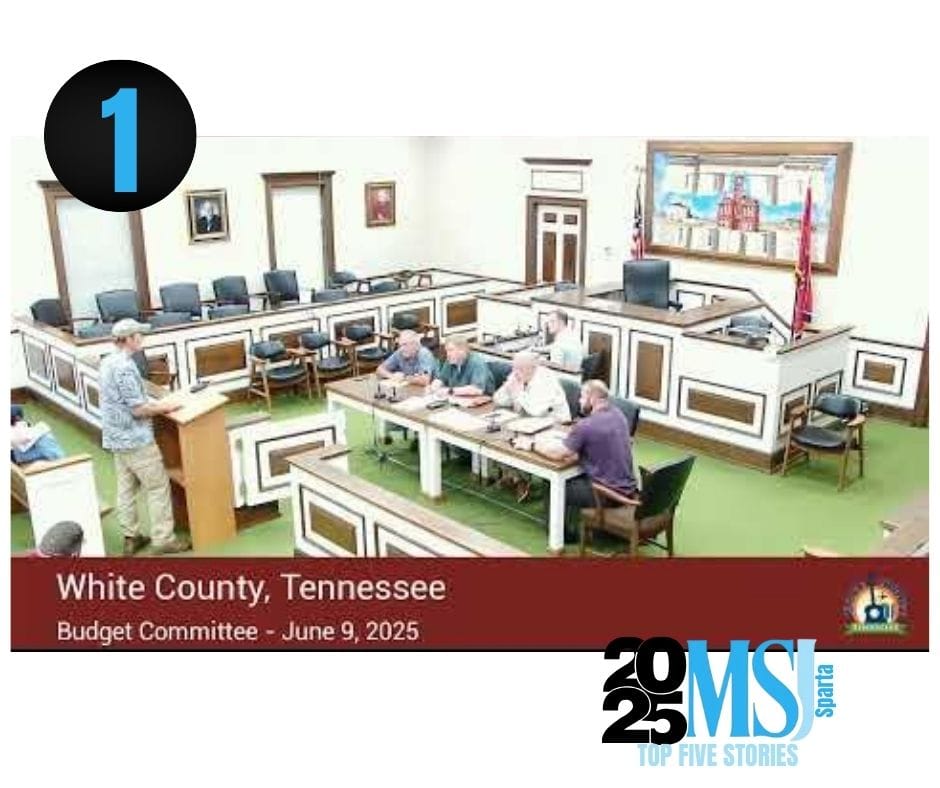
The White County budget dominated public discourse throughout 2025, emerging as the county’s most contentious and closely watched issue of the year. What began as a routine annual process evolved into months of debate, failed votes, packed meeting rooms, and sharp disagreements over taxes, employee pay, and the county’s priorities, ultimately drawing a direct warning from the Tennessee Comptroller’s Office. 

At the center of the debate was the property tax rate and how to balance the county’s financial obligations while addressing longstanding concerns over compensation for county employees, particularly deputies and emergency medical services workers. Early proposals placed the tax rate as high as $1.71, prompting strong public backlash. Over time, repeated revisions brought the figure down, first to $1.57, then into the mid-$1.40 range, as commissioners sought a compromise that could secure enough votes to pass. 

Employee pay remained one of the most divisive elements of the budget. Initial plans included a 15 percent raise, later scaled back to an 8 percent increase, and eventually restructured into flat raises in an effort to better support lower-paid positions such as convenience center workers. The discussion expanded to include longevity pay, tiered salary systems, and targeted adjustments for specific departments. While many commissioners argued that competitive wages were essential to recruit and retain staff, others warned about compounding costs and long-term financial risk. 

Public input played a major role throughout the process. Residents regularly spoke about the strain of higher property taxes, while others emphasized the importance of adequately funding emergency services. A house fire earlier in the year intensified scrutiny of EMS staffing and response capabilities, further elevating the emotional stakes of the debate. These moments shifted portions of public opinion, with some meetings seeing more speakers advocating for raises rather than opposing tax increases. 

Beyond pay and taxes, the budget also exposed disagreements over county structure and spending priorities. Proposals involving a full-time emergency management agency director, parks and recreation leadership, additional law enforcement resources, ambulance remounts, and central maintenance staffing were repeatedly added, removed, or revised in search of consensus. The county’s landfill operations and animal shelter funding also surfaced as broader concerns tied to discretionary spending and service sustainability. 

As deadlines approached, tensions escalated. Multiple budget proposals failed by narrow margins during full court votes, sending plans back to committee and fueling frustration among commissioners. The lack of consistent input from all members became a recurring criticism, as budget committee members expressed difficulty crafting a proposal without clear direction from the full commission. 

The situation reached a critical point when the Tennessee Comptroller’s Office intervened, warning that failure to pass a balanced budget by the end of August would result in the state stepping in to set tax rates and control expenditures. The comptroller made clear that while the state would not raise local taxes, it would cut discretionary spending, including funding for volunteer fire departments, employee raises, parks and recreation, veterans’ services, animal shelter operations, and other non-mandated programs. 

Faced with that reality, commissioners ultimately reached a compromise. After months of revisions and negotiations, the county passed a fiscal year 2026 budget with a $1.41 property tax rate, avoiding state intervention and bringing the prolonged debate to a close. 

The 2025 budget battle left a lasting mark on White County, exposing deep divisions among the community over fiscal responsibility, public services, and the cost of governing. It also showcased the challenges that commissioners face in representing their constituents' concerns while making decisions for the good of the community as a whole – both for now and the future, making it one of the defining stories of the year. 

Share this article
The link has been copied!