
McMinnville Community
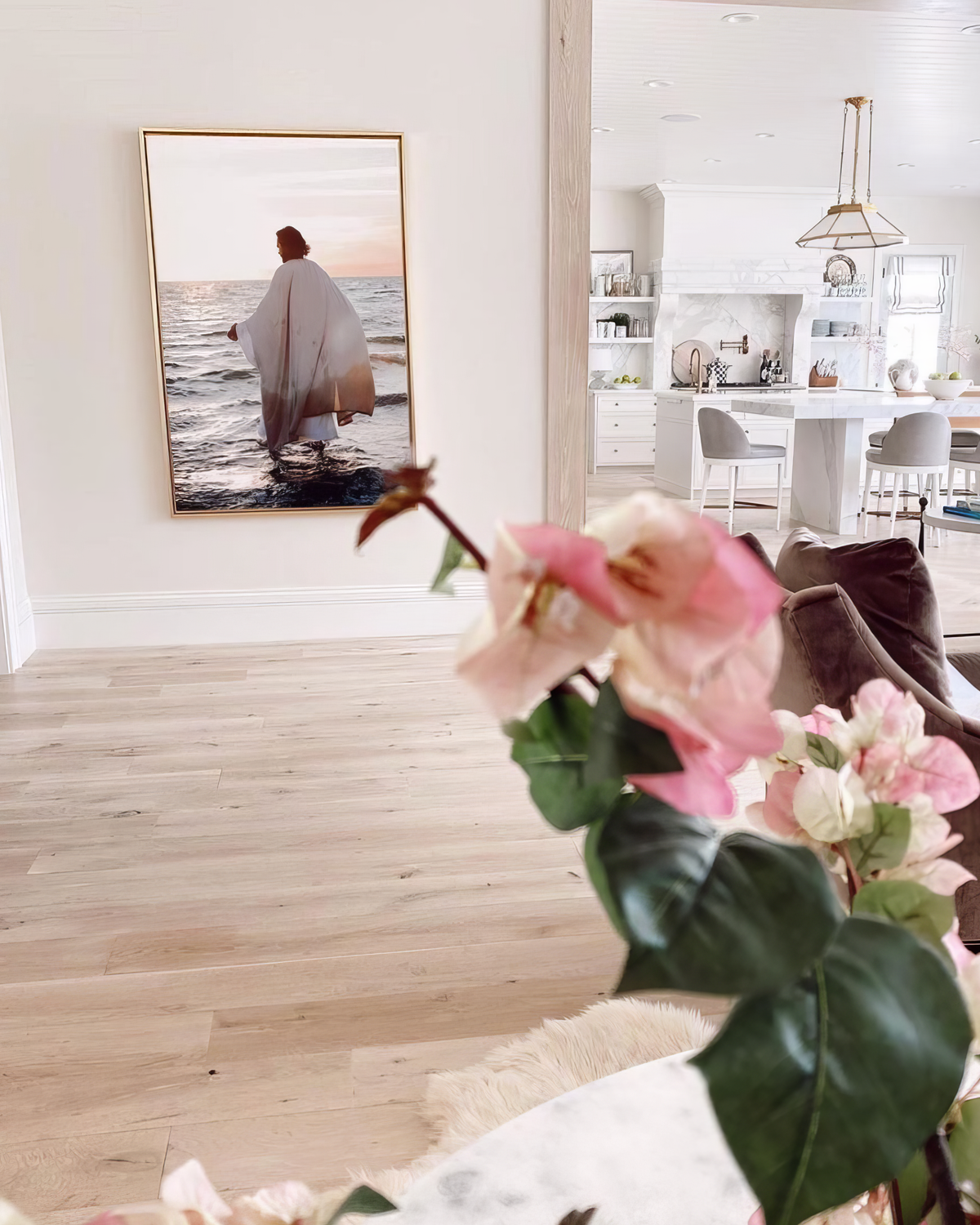
In the weeks between Easter and Mother's Day, images of Christ tend to show up in places you'd expect. Church bulletins, social media feeds, greeting cards. But one of the most recognized depictions of Jesus in the modern world didn't come from a Renaissance master or a Christian bookstore.
It came from the camera of a Franklin, Tenn., resident named Mark Mabry, a man some have taken to calling the Godfather of Modern Christian Art.
Mabry is no stranger to McMinnville. He is a friend of Main Street Media and still circles back to Warren County regularly. Last October, he donated one of his most iconic works, a large-scale photographic canvas titled "Walking on Water," to the Main Street McMinnville Farm to Table dinner, where it fetched $1,000 to support downtown revitalization efforts.
It was a generous gesture, but for Mabry, the piece represented something far bigger than a fundraiser donation. Walking on Water is the signature image from "Reflections of Christ," a photographic art series that did something no one had done before: Depict the life of Jesus through cinematic, large-format photography intended for mainstream audiences.
Before Mabry, the visual language of Christian art had remained largely unchanged for centuries. Paintings. Sculptures. Stained glass. The idea of photographing a figure of Christ, with real actors, real light, real emotion and presenting it as fine art simply didn't exist in any mainstream capacity.
“The resistance came from people who had never considered Christian art in any format other than painting and sculpture,” Mabry said. But the timing worked in his favor. His debut came on the heels of Mel Gibson's "he Passion of the Christ," which had pushed the boundaries of Christian film and opened audiences to more visceral, modern portrayals of Jesus. Mabry walked through that same door, only with a camera instead of a movie set.
"Reflections of Christ" launched in January 2007 with a gallery exhibition in Mesa, Arizona. Over 100,000 people walked through the exhibit in its first six months. A slideshow of the images went viral, spreading through blogs and email chains in an era before social media as we know it existed. The demand for prints was immediate and overwhelming.
“I started making them for free, which was not sustainable,” Mabry recalled with a laugh. So, he built a website, and the project grew from there.
Nearly a decade later, in 2016, several influential interior designers posted Mabry's "Walking on Water" image on Instagram. Suddenly there was international demand. The image began appearing in living rooms, churches and offices across the globe.
Today, Mabry's photographic depictions of Christ hang in tens of thousands of homes and thousands of churches around the world. More importantly, photography has become a widely accepted medium for Christian art, a shift that traces directly back to what Mabry started in that Arizona gallery nearly two decades ago.
The scope of Mabry's influence became clear when the National Cathedral in Washington, D.C., expressed interest in exhibiting "Reflections of Christ." Though the logistics ultimately didn't come together, the inquiry itself was a landmark moment, one of the most important religious institutions in America signaling that photographic sacred art had arrived. The interest coincided with a broader cultural shift, as influencers and public figures began openly discussing their faith in Jesus online, often using Mabry's images as a visual anchor for those conversations.
For McMinnville, the connection to Mabry is personal rather than incidental. His history with Main Street Media and his continued willingness to support the community, canvas in hand, speak to the kind of relationship small towns value most: One built on showing up.
And if you happened to be at the Farm to Table dinner last fall and watched "Walking on Water" go on the auction block, you were watching more than a fundraiser. You were watching a piece of art history, created by the man who proved that a photograph of Jesus could move people just as deeply as any painting ever has.
Members Discussion