
Crossville
TWRA Press Release:
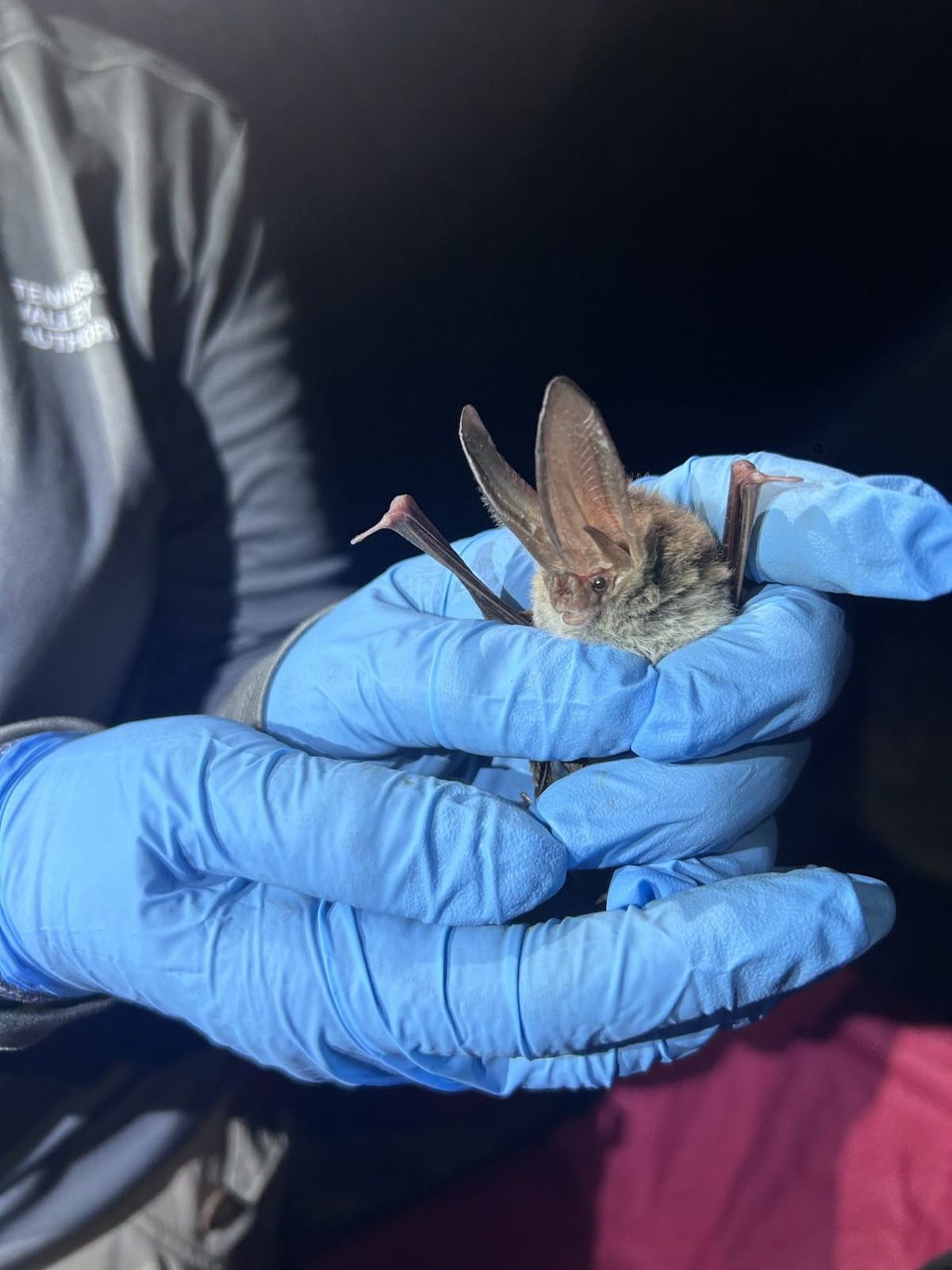
CROSSVILLE, Tenn. --- The Tennessee Wildlife Resources Agency (TWRA)’s Division of Biodiversity held the 2026 Bat Blitz in late September, a two-night biological survey that provides an intense snapshot of bat species living in an area. Two federally endangered bats and one proposed endangered species were reported.
Fifty biologists and volunteers gathered over the two-night undertaking, including staff from TWRA and volunteers from as far away as Idaho and Oklahoma. The event's overarching mission is to provide data to inform Tennessee’s State Wildlife Action Plan and guide bat conservation and management. The event also gives experienced, permitted bat biologists a chance to teach the next generation proper identification, handling, and trapping techniques.
The blitz took place on public and private property in Fentress County and surrounding areas. Stormy conditions on the first night limited netting efforts. Regardless, biologists captured and studied 316 individual bats, including nine of Tennessee’s 16 species. Two, the Indiana Bat and the Gray Bat, are federally endangered, and one, the Tricolored Bat, is proposed for listing as endangered. Biologists also captured two species of greatest conservation need, the Eastern Small-Footed Bat and the Rafinesque Big-Eared Bat.
White-nose Syndrome, a fungal disease, has impacted bat populations and spread across the country since its first detection in the U.S. in 2006. Additionally, habitat loss, the number one driver of biodiversity decline in Tennessee, has also affected bat species. Bats play a critical role in their ecosystem by controlling insect populations, saving farmers billions annually across the US.
TWRA Biologist Dustin Thames oversaw the event and shared, “Bat populations have declined in recent years. The data collected will help us better understand, conserve, and protect bat populations. This event was hugely successful thanks to our partners, including The Nature Conservancy’s Cave and Karst Program Director, Cory Holliday, and the Tennessee Bat Working Group’s Chair and Tennessee Valley Authority Zoologist, Liz Hamrick. Their support and the great effort put forth by all biologists are reflected in the great results from our time in the field.”
The Tennessee Wildlife Resources Agency is responsible for protecting, managing, and conserving fish and wildlife species for the benefit of Tennesseans and visitors. The Agency also maintains public safety through law enforcement and safety education on waterways.
Members Discussion