'If we had a good hanging...'
Sherrell calls for public executions during local candidate forum


Sherrell calls for public executions during local candidate forum
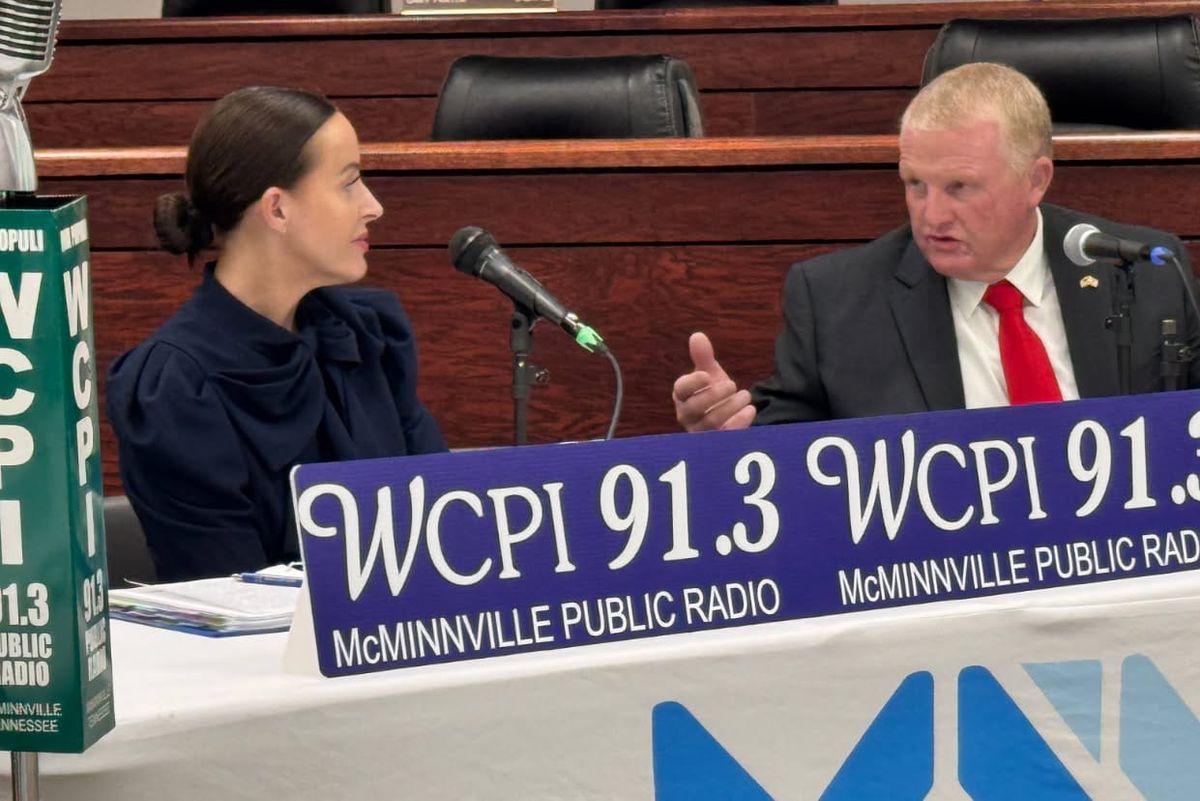
State Rep. Paul Sherrell told a McMinnville political forum Monday night that public hangings could deter crime, suggesting an execution on the town square might discourage others from breaking the law.
“If we had a good hanging right here on the public square by the courthouse, I bet it would deter some of those people from committing a crime,” Sherrell said.
The remarks came during a sometimes pointed exchange between Sherrell, the Republican incumbent representing Tennessee House District 43, and Democratic challenger Samantha Petit, who questioned him about his previous comments supporting hanging as a method of execution.
Petit asked how Sherrell reconciled his stated belief in the sanctity of human life with the idea of turning state-sanctioned killings into a public spectacle.
Sherrell, who said he previously served approximately 10 years as a Sparta police officer, responded by discussing drug-related crime, law enforcement and capital punishment.
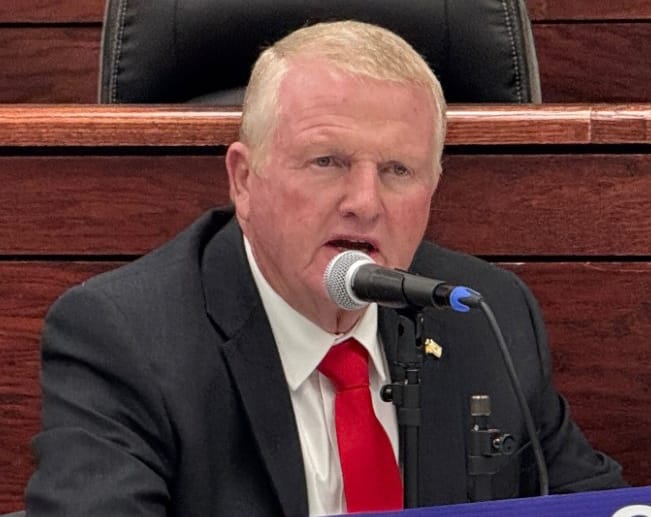
“I believe we need to support our law enforcement the best I can, and I believe in capital punishment,” Sherrell said. “We have the electric chair, we have the injections to do it. We know that doesn't work. So I'm in favor of bringing back the firing squad if that's what we have to do, or bringing back hanging if that's what it takes.”
He followed that statement with his suggestion that a public hanging on the square could serve as a deterrent.
The exchange came less than two weeks after Tennessee's failed Sept. 30 execution of Christa Pike, who survived two doses of lethal injection drugs and was hospitalized. Gov. Bill Lee subsequently halted further executions pending a review of the state's procedures.
It also followed Thursday's announcement by the Pentagon that the Dec. 3 execution of former Army psychiatrist Nidal Malik Hasan would be livestreamed. Hasan, convicted of killing 13 people and wounding 32 others in the 2009 Fort Hood shooting in Texas, is scheduled to be executed by firing squad.
Sherrell has previously faced criticism over comments concerning hanging as a method of execution. During a Tennessee House Criminal Justice Committee meeting in Feb. 2023, he suggested adding hanging by a tree to legislation involving execution by firing squad.
The remark prompted criticism, including objections from the Tennessee NAACP, and Sherrell subsequently apologized. In a statement released through the House Republican Caucus, he said he had used poor judgment and that his comments were intended to express support for capital punishment in cases involving particularly serious crimes.
Monday's remarks went further by specifically suggesting a public execution as a deterrent.
The exchange was one of several pointed moments between the candidates, who were given opportunities to question one another directly during the forum presented by McMinnville Public Radio WCPI 91.3-FM, Ben Lomand Connect and Main Street Media.
Another came when Petit questioned Sherrell about House Bill 1376, legislation concerning the regulation and taxation of hemp-derived cannabinoid products.
Petit asked how the state would replace tax revenue associated with the hemp industry and what had happened to revenue already collected.
Sherrell acknowledged that he could not recall the specific legislation.
“I do not remember voting on that bill specifically,” Sherrell said. “There are 99 of us in the House, and we can file 15 bills per person. So I couldn't tell you exactly what 1376 says. I don't know, truthfully.”
According to Tennessee General Assembly records, Sherrell was among the co-sponsors of HB 1376 and voted in favor of the legislation on April 10, 2025. He also supported it during a March 17 vote in the House Government Operations Committee. The measure became Public Chapter 526.
Sherrell also questioned Petit about her professional background, asking where she worked and what she did for a living.
Petit said she has worked for McMinnville Drug Center for approximately 20 years, handling medical billing and reimbursement among other pharmacy duties. She also owns a travel agency and said she and her husband own J's Restaurant.
During a second round of questions, Sherrell asked Petit why she had chosen to run as a Democrat and whether the decision was her own or the result of encouragement from others.
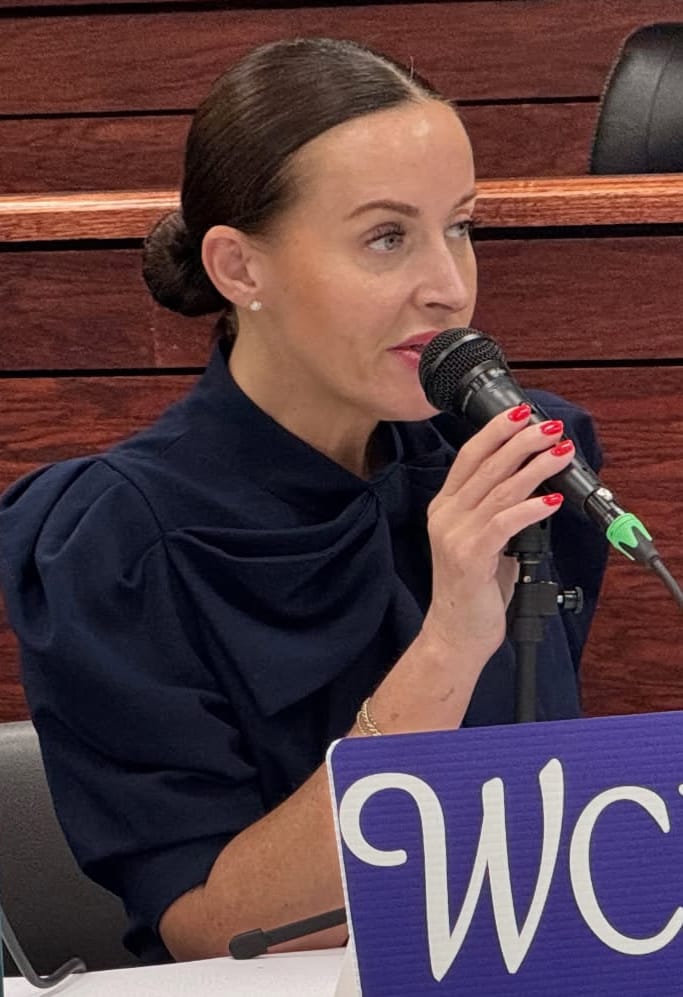
“I definitely consider myself an old-school Southern Democrat,” Petit said.
She said frustration with political division and the inability of elected officials to work together motivated her candidacy.
“I got sick and tired of people being sick and tired,” Petit said. “And I got sick and tired of the extreme rhetoric from both sides, and no one being able to work together to bring forth meaningful legislation that helps people.”
Petit said lawmakers should be able to disagree while still finding common ground.
The candidates also addressed what they considered the most important issues facing voters.
Sherrell pointed to rising fuel prices and the conflict involving Iran, arguing that developments overseas were affecting Americans at home.
“Iran, they are Muslims, and these people over there would just as soon cut your head off as look at you,” Sherrell said. “So we either fight those people over there or we fight them over here.”
Sherrell also invoked the Sept. 11, 2001 terrorist attacks as part of his argument.
Petit identified the cost of living as the most pressing issue, particularly the financial pressures facing working families. She called for eliminating Tennessee's state sales tax on groceries.
“Tennesseans should not have to work two or three jobs just to afford a basic standard of living,” Petit said.
Sherrell urged caution on the grocery tax proposal.
“I think it's something that needs to be studied before you just jump into it and do it,” he said.
In their opening statements, the candidates offered different perspectives on their qualifications and priorities.
Petit described herself as a wife, mother, Christian, healthcare worker and small business owner rather than a career politician. She criticized both major political parties for allowing partisan disputes to overshadow the needs of constituents.
“Both parties have failed us,” Petit said. “Both have spent far too much time fighting each other, and not enough fighting for the people they represent.”
Sherrell, who has served in the General Assembly since 2016, emphasized economic development, Second Amendment rights, support for law enforcement and emergency personnel, agriculture and education.
He pointed to his endorsement by the National Rifle Association, reiterated his opposition to abortion and same-sex marriage and emphasized that he voted against school vouchers.
Sherrell used his closing remarks to highlight his legislative accomplishments and endorsements.
Petit closed by returning to her argument that effective public service requires cooperation rather than rigid party loyalty.
“Tonight you've heard two different versions for the future,” Petit said. “I believe public service is about more than holding an office. I'm not running because I believe one party has all the answers - neither does. But we can disagree, find common ground and still accomplish something meaningful for the people we represent.”
The forum was moderated by Professor John Vile, chairman of Political Science and dean of the Honors College at Middle Tennessee State University, alongside WCPI host Bill Zechman.
Sherrell and Petit are competing to represent Warren and White counties in Tennessee House District 43 in the Nov. 3 general election. Early voting begins Wednesday, Oct. 14.