Sheriff’s Office Defends Flock Camera Program


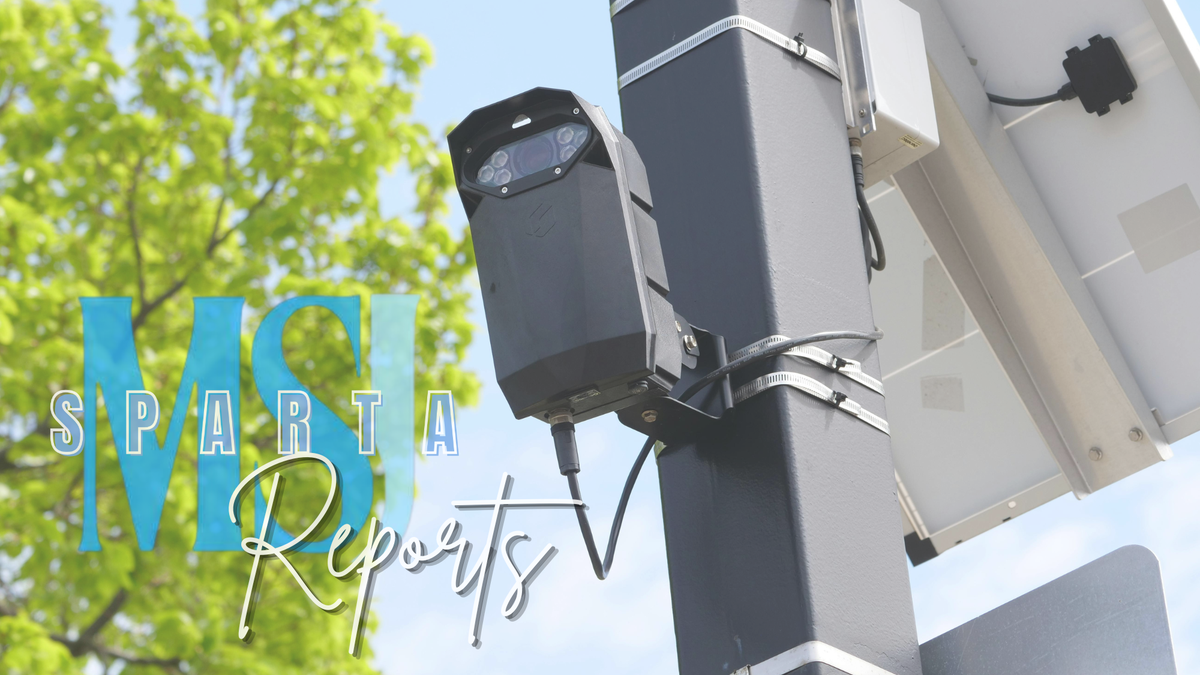
Questions raised during Monday night's White County Commission meeting about Flock Safety license plate reader cameras prompted a detailed response this week from the White County Sheriff's Office, which says the system remains one of its most valuable investigative tools while operating under strict privacy and accountability safeguards.
During the commission's June 1 budget meeting, commissioners discussed concerns ranging from the system's cost to how data collected by the cameras is stored, shared and protected.
In a letter sent to county leaders, White County Sheriff's Office Captain Nate Theiss addressed those concerns directly, arguing that the Flock system differs significantly from other license plate reader technologies because it does not sell collected data and operates on CJIS-compliant servers designed to meet criminal justice information security standards.
Theiss said deputies and administrators must complete training and certification before receiving access to the system. Every search requires both a case number and an investigative reason, and all activity is permanently logged and tied to an individual user account. According to Theiss, accounts are immediately deactivated when an employee leaves the agency, and regular audits are conducted to ensure compliance with department policies.
The sheriff's office also sought to address concerns about privacy and federal access to collected information. According to documents provided by Flock Safety, the company does not sell license plate reader data and does not contract with Immigration and Customs Enforcement or the Department of Homeland Security. The company states that federal agencies are excluded from nationwide and statewide network search capabilities and that all searches require documented justification.
Flock's materials also state that the cameras collect only information visible from public roadways, including license plate numbers, vehicle make, model, color, location and time stamps. The company says it does not collect names, addresses, phone numbers, driver identities or biometric information and that data is automatically deleted after 30 days unless otherwise retained under approved policies.
Theiss noted that other license plate reader systems already operate within White County. He cited Tennessee Highway Patrol vehicle-mounted readers and systems used by repossession companies, which he said are supplied by Motorola's Vigilant platform. According to the sheriff's office, those systems operate under different business models than Flock.
Beyond privacy concerns, Theiss emphasized what he described as the system's operational value.
"In the last month, it has assisted in cases involving drug offenses, domestic violence, missing persons, sex offenders and auto thefts," Theiss wrote.
He also reported that the system generated alerts on three individuals appearing on federal terrorist watch lists while traveling through White County during the past year.
According to the sheriff's office, the county handles roughly 30,000 calls for service annually. Theiss said the camera network provides investigative coverage comparable to having approximately 12 deputies working around the clock.
Search audit data provided by the department shows deputies conducted approximately 850 Flock searches between Jan. 1 and June 4.
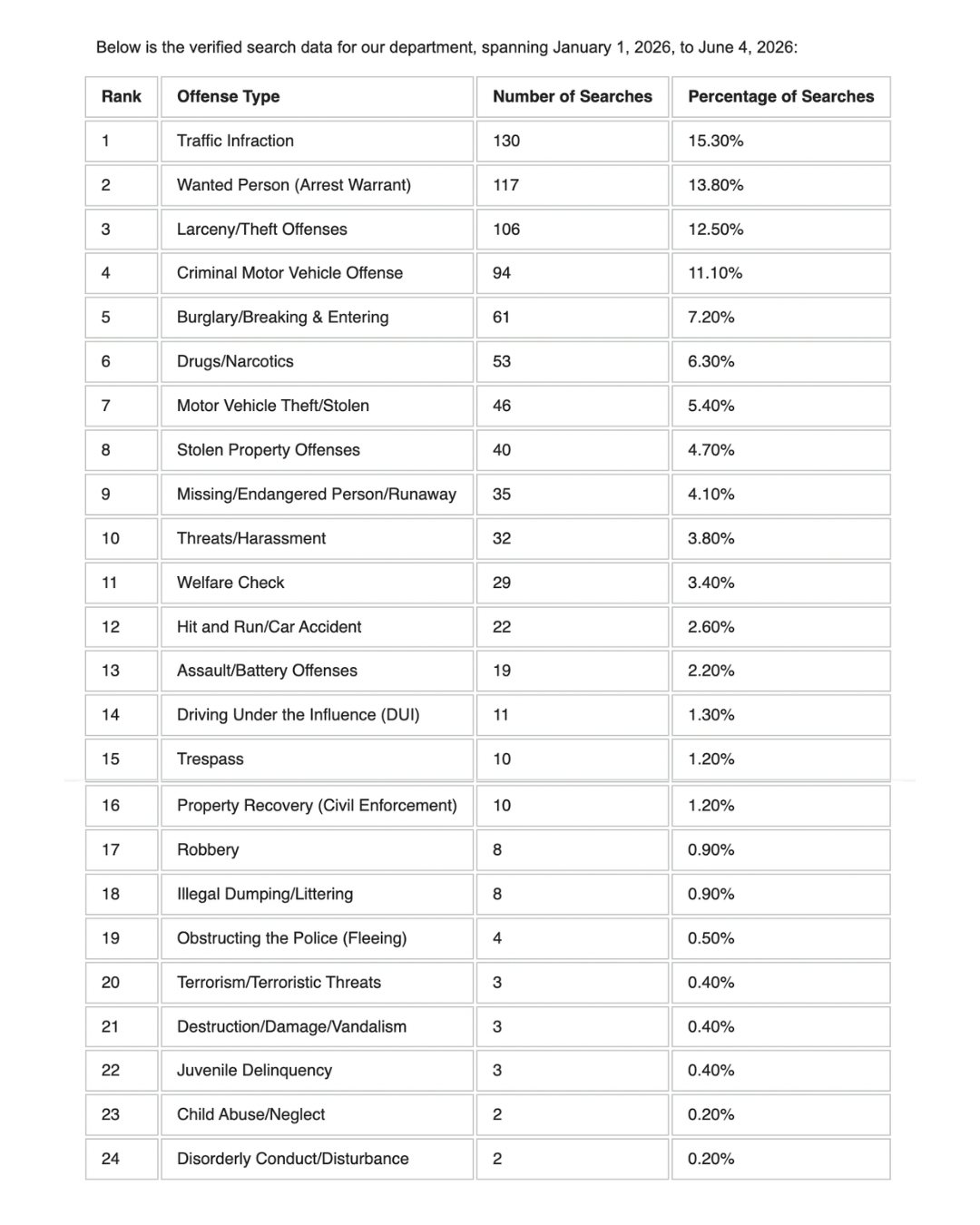
The most common use involved traffic infractions, which accounted for 130 searches, or about 15 percent of all activity. Searches for wanted persons totaled 117, while theft-related investigations accounted for 106 searches. Criminal motor vehicle offenses, burglaries, narcotics investigations and stolen vehicle cases also ranked among the system's most frequent uses.
The data also showed searches connected to missing persons investigations, harassment complaints, welfare checks, hit-and-run crashes, assaults, DUI investigations and robbery cases. Three searches were categorized as terrorism or terroristic threats.
To provide additional transparency, Theiss said the sheriff's office is willing to provide monthly audit reports to county commissioners, similar to the regular activity reports already presented by E-911 officials.
The commission has not taken any action regarding the Flock system, but the discussion is expected to continue as county leaders review technology expenditures and public safety priorities during the current budget cycle.