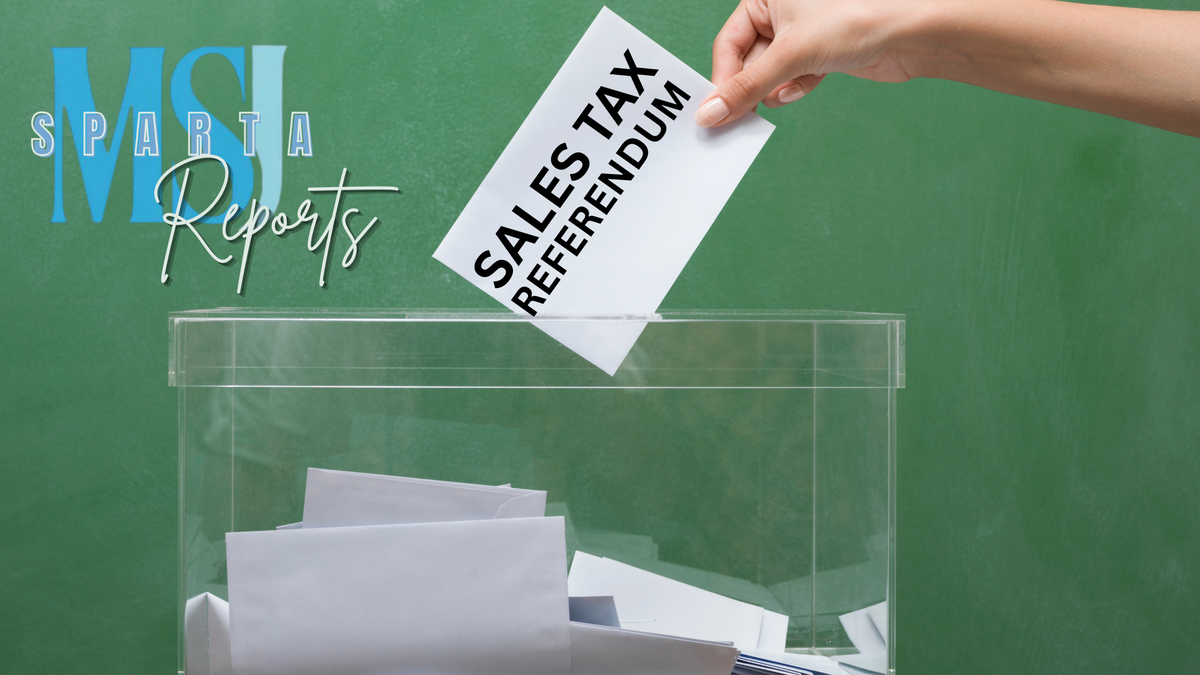
White County voters have rejected a proposed sales tax referendum that would have increased the county’s local option sales tax rate and changed how a portion of local tax revenue is distributed between the county and the City of Sparta.
In Tuesday night’s Primary Election, 56.06% of voters — or 1,995 ballots — were cast against the measure, while 43.94%, or 1,564 voters, supported it.
The referendum was presented only to White County residents living outside Sparta’s city limits. Sparta residents were exempt because the city already operates under the higher local sales tax rate that the county was seeking to adopt.
If approved, the county’s local sales tax rate would have increased from 2.25% to 2.75%, bringing the total combined sales tax rate to 9.75% when paired with the state’s 7% rate. Consumers inside Sparta already pay that amount, while purchases made elsewhere in the county remain at 9.25%.
The proposal centered less on creating a new tax rate and more on aligning the county and city rates. Under the current structure, Sparta is able to retain revenue generated by the additional half-cent collected within city limits. County officials have argued that because a significant percentage of local sales activity occurs inside Sparta, the county is missing out on revenue generated by shoppers throughout the area.
By matching the city’s rate, the additional revenue would have fallen under the state’s distribution formula, requiring the funds to be shared rather than remaining solely with the city.
In the months leading up to the vote, county leaders discussed several possible uses for the projected additional revenue, including property tax relief initiatives and addressing budgetary needs. One proposal floated during commission discussions included setting aside money for low-income property tax relief, another portion for broader household relief efforts, and the remainder for county operations.
Still, the county commission never formally settled on a definitive spending plan before the referendum reached voters.
That uncertainty appeared to become a sticking point for some constituents during public discussions surrounding the measure. While supporters viewed the referendum as an opportunity to generate additional county revenue without directly raising property taxes, opponents and skeptical voters frequently questioned exactly how the money would be spent if approved.
Without a clearly established long-term plan attached to the referendum, some voters appeared hesitant to support a tax increase based on future possibilities rather than firm commitments.
The failure of the referendum means the current tax structure will remain in place. White County will continue operating under the 2.25% local option sales tax rate, while Sparta will maintain its existing 2.75% rate and continue retaining the additional revenue generated within city limits.
The vote brings an end to months of public debate and county commission discussion surrounding one of the most closely watched issues on the local ballot this election cycle.
The Main Street Journal - Sparta's Election Coverage is brought to you by Tennessee Credit.
Share this article
The link has been copied!
Members Discussion
Your link has expired. Please request a new one.
Your link has expired. Please request a new one.
Your link has expired. Please request a new one.
Great! You've successfully signed up.
Great! You've successfully signed up.
Welcome back! You've successfully signed in.
Success! You now have access to additional content.